
IT forensics explains the cause to you.
- Court-ready evidence preservation
- Precise root-cause analysis
- Traceable evaluation
Assumptions are not enough: facts instead of questions!
After an incident, digital traces are fleeting: careless access can delete information, and log files overwrite themselves. Once the data is gone, it can no longer provide any answers.
aramido therefore acts deliberately and quickly and examines precisely the systems that shed light on the cause. Using a proven approach, we secure the traces before they disappear.

Fast evidence preservation
Every minute counts. We respond at short notice, secure the volatile traces first and thereby give you the best possible result.
Clarity about the cause
After an incident, countless questions arise. We examine the facts and answer what the cause was. In doing so, we create the basis for the next steps.
Enforceable results
Our evidence chain meets the requirements of courts and insurers. You can therefore assert claims and clarify responsibilities.
How IT forensics works
IT forensics clarifies, after a security incident, what happened and how it came about. We reconstruct the course of events on the basis of digital traces left on systems, in networks and in the cloud, and turn them into a demonstrable basis for your next steps, such as an official notification, an insurance claim or a decision on further measures.
Cyber insurers, supervisory authorities and courts require documented and law-compliant processing. IT forensics is therefore usually no longer a purely internal matter today. Our results meet these requirements and support you with statutory reporting obligations, for example under GDPR, NIS-2 or DORA.
Findings only count if they hold up. That is why we work methodically: a documented chain of custody, hardware-supported acquisition and verifiable analysis steps ensure that the results are court-ready and usable for insurers and operational decisions.
- 1We clarify which data sources matter and secure them in the right order in accordance with the order of volatility. We also clarify the legal framework so that the results remain usable later.
- 2We create copies of the storage media without altering the original data and secure them with checksums. The chain of custody thus remains verifiable at all times.
- 3We evaluate the secured data and place the individual traces in a timeline. In this way we reconstruct what happened and what the cause was.
- 4
We produce an expert report that records all steps in a traceable manner, plus an understandable summary for decision-makers, legal advisers and insurers.
The results form the basis for your next steps, such as an official notification or measures that prevent another IT incident.
Specialized forensics for every threat situation
The threat situation determines the forensic approach. Depending on the security incident, we reconstruct digital traces from a wide range of sources, from persistent data and volatile artifacts to complex network flows.
We use specialized methods to enable analysis across all levels. aramido looks precisely where the decisive clues lie.
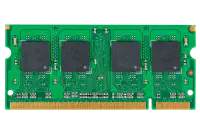
Memory Forensics
Securing volatile data to reconstruct processes and uncover active attacks.
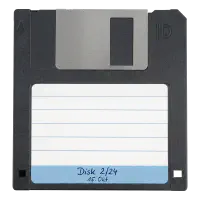
Disk Forensics
Examining storage media and forensic images to reconstruct data and traces of use.
Network Forensics
Analyzing traffic to prove communication between compromised endpoints and data exfiltration.

Host Forensics
Analyzing system and filesystem artifacts to trace user activity and the course of the attack.
Malware Forensics
Examining malicious software to identify attack patterns and prevent reinfection.

Cloud Forensics
Clarifying incidents in a tenant’s cloud environments across multiple regions.
Have evidence secured.
Briefly describe the situation in your message. We will get back to you promptly and take over the further preservation. Every minute counts so that no trace is lost.
Häufig gestellte Fragen
aramido operates worldwide and, thanks to our regional presence, is regularly deployed across many parts of Germany. We work on site at companies and public authorities as well as remotely. Our work focuses, among other places, on these locations:
Your contribution to IT forensics
After an incident you want to act quickly and correctly. Especially in the first few minutes, it is decided whether traces are lost or can still be used later. That is why it is up to you to involve us early and leave your systems unchanged until they are secured.
With your knowledge of the systems and your infrastructure, together with our specialist expertise, we can carry out digital forensics as a team. We determine, in accordance with the order of volatility, which items need to be secured and in which order. Using your access, we create forensic copies and analyze the data.
- Report the incident as early as possible
- Leave affected systems in their original state
- Name the systems you consider affected
- Share your knowledge of your infrastructure with us

 Andreas Sperber
 Kadir Ates
 Armin Harbrecht

 Hannah Schneider
 Regina Okun