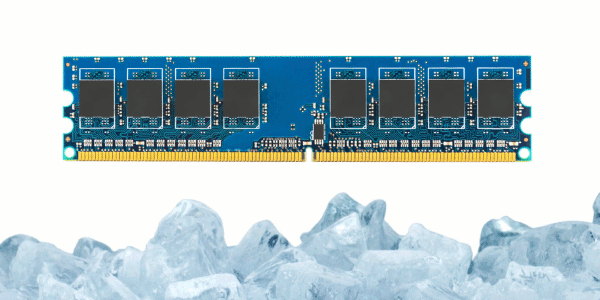
Clarify the cause with IT Forensics in Dresden
aramido brings clarity:
- Court-ready evidence preservation
- Precise root-cause analysis
- Traceable evaluation
IT Forensics in Dresden: facts instead of assumptions
After a security incident, digital traces remain usable only for a limited time. Those who continue to work on the affected systems risk changing the evidence, because logs overwrite themselves continuously. Once that has happened, few reliable answers remain. That is why IT Forensics in Dresden requires quick action in order to clarify the cause in good time and in a reliable way.
aramido proceeds calmly and deliberately and turns specifically to the systems that explain the trigger. Using a proven approach, we secure the traces while they are still intact. In Dresden and the region, we are quickly on site when needed, whether in your semiconductor plant, laboratory or office premises.

Fast Evidence Preservation
Every minute counts. We secure the volatile traces first and start the acquisition in Dresden when needed.
Clarity about the Cause
After an incident, many questions arise. We examine the facts and show where the cause lies, especially when production and research data are affected.
Enforceable Results
An expert report that stands up before courts and insurers needs an unbroken chain of custody. That is exactly what our analysis is designed to deliver, so you can assert your claims.
Structured analysis after an incident in Dresden
What is IT Forensics?
IT Forensics in Dresden clarifies, after a security incident, what happened and how it came about. To do so, we follow the digital traces left on servers, in networks and in the cloud. This creates a reliable basis for the next steps: a report to the authorities, the compensation through your cyber insurance or the continuation of critical business processes. For companies from Dresden and the region whose operations depend heavily on IT, this evidence is decisive.
Reliable means: the results must withstand scrutiny. That is why we document every acquisition and work with a chain of custody (Chain of Custody). Since all analysis steps remain traceable, the results are usable before courts, for insurers and for operational decisions. In Dresden, aramido takes on this task as your partner for IT Forensics.
- 1First we determine which data sources are relevant to the case and define the acquisition order in accordance with the order of volatility.
- 2We create copies of the storage media without altering the originals and verify them with checksums.
- 3We evaluate the secured data and put the traces into a chronological order. In this way we reconstruct the course of events.
- 4Finally, a traceable expert report is produced, with an understandable summary for decision-makers, legal advisers and insurers.
Have evidence secured in Dresden.
Briefly describe in your message what happened. We will get back to you promptly and take over the forensic analysis. The sooner we start, the more likely the traces remain intact. If it is urgent, reach us directly on the emergency hotline: +49 721 451 99 112.
IT Forensics for the high-tech and research location of Dresden
Dresden is the heart of European microelectronics. Under the name Silicon Saxony, manufacturers such as Infineon, Globalfoundries and Bosch produce semiconductors here, while TU Dresden and the Fraunhofer Institutes research fundamentals and applications. In the healthcare sector, Syntegon with Pharmatec provides machinery for pharmaceutical production. Those who experience a cyber incident here carry a responsibility that goes beyond their own organisation: for production data, development statuses and formulations. That is exactly why aramido is here in the region: we secure the affected traces before they are lost and clarify the cause.
In the Dresden area, clinics, research and production depend on reliable IT. The State Art Collections of Dresden were affected by a cyber attack, and at Dresden University Medicine patient data was exfiltrated on a large scale. After an incident, clarification counts alongside restoration: what was stolen, altered or encrypted? That is precisely where aramido supports you with IT Forensics in Dresden, preferably remotely and on site when needed. If you first need immediate help, you will find it on our page on IT emergency response and incident response in Dresden.
Forensic disciplines for incidents in Dresden and the region
Which methods we apply depends on the threat situation. Digital traces come from many sources: from persistent data, volatile artifacts and complex network flows.
For the analysis across all levels, we use specialized procedures. In Dresden, aramido looks exactly where the decisive clues lie.
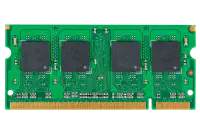
Memory Forensics
We secure volatile data from working memory, reconstruct processes and thereby uncover active attacks.
Disk Forensics
Storage media and forensic images show which data and traces of use can be reconstructed.

Network Forensics
By analyzing network traffic, we prove communication between compromised endpoints and data exfiltration.

Host Forensics
System and file artifacts reveal which user activities took place and how the attack unfolded.
Malware Forensics
When examining malicious software, we recognize attack patterns and prevent reinfection.

Cloud Forensics
In cloud environments, we clarify incidents of a tenant across multiple regions.
Frequently asked questions about IT Forensics in Dresden
Your contribution to IT Forensics
After an incident in your Dresden company, it is important to act quickly and correctly. Whether traces remain usable later is usually decided in the first few minutes. So involve us early and leave your systems unchanged until they are secured.
Your knowledge of the systems and infrastructure complements our specialist expertise, so that we can carry out digital forensics together. In accordance with the order of volatility, we define what is secured and in which order. Using your access, forensic copies are created, which we then examine.
How you preserve your traces
- Report the incident early
- Leave affected systems unchanged
- Name the systems you consider affected
- Share your knowledge of the infrastructure with us

 Valerie Erhard
 Kadir Ates
 Armin Harbrecht
 Andreas Sperber