
Clarify the cause with IT Forensics from Nuremberg
aramido brings clarity:
- Court-ready evidence preservation
- Precise root-cause analysis
- Traceable evaluation
IT Forensics in Nuremberg: facts instead of assumptions
After a security incident, digital traces survive only briefly. Any further use of the systems can change the evidence, for example because logs overwrite themselves continuously. Once that happens, no reliable statement remains possible. That is why, for IT Forensics in Nuremberg, you expect quick action in order to clarify the cause in good time and in a reliable way.
Drawing on many years of experience, aramido works in a planned manner and focuses on the systems that lead us to the cause. We often work remotely, because data centres are located in many places around the world. When needed, however, we are also quickly on site in Nuremberg or the metropolitan region, whether in an office, a production facility or a logistics centre.

Fast Evidence Preservation
Every minute counts. We secure the volatile traces first and start the acquisition in the metropolitan region when needed.
Clarity about the Cause
After an incident, many questions arise. Through our digital forensics we show where the cause lies.
Enforceable Results
An expert report that stands up before courts and insurers needs an unbroken chain of custody. That is exactly what our analysis is designed to deliver, so you can assert your claims.
Structured analysis after an incident in Nuremberg
What is IT Forensics?
IT Forensics in Nuremberg clarifies, after a security incident, what happened and how it came about. To do so, we follow the digital traces left on servers, in networks and in the cloud. This creates a reliable basis for the next steps: a report to the authorities, the compensation through your cyber insurance or the continuation of critical business processes. For companies from Nuremberg and the region whose operations depend heavily on IT, this evidence is decisive.
Reliable means: the results must withstand scrutiny. That is why we document every acquisition and work with a chain of custody (Chain of Custody). Since all analysis steps remain traceable, the results are usable before courts, for insurers and for operational decisions. In Nuremberg, aramido takes on this task as your partner for IT Forensics.
- 1First we determine which data sources are relevant to the case and define the acquisition order in accordance with the order of volatility.
- 2We create copies of the storage media without altering the originals and verify them with checksums.
- 3We evaluate the secured data and put the traces into a chronological order. In this way we reconstruct the course of events.
- 4Finally, a traceable expert report is produced, with an understandable summary for decision-makers, legal advisers and insurers.
Have evidence secured in Nuremberg.
Briefly tell us in your message what happened and which systems are affected. We will get back to you promptly and take over the forensic analysis. The sooner we start, the more traces remain intact. If it is urgent, reach us directly on the emergency hotline: +49 721 451 99 112.
IT Forensics for the economic and research region of Nuremberg
The Nuremberg metropolitan region combines research, medical technology and the software industry. Around the Medical Valley EMN and the Fraunhofer IIS, companies with highly valuable data have settled, and Nuremberg Clinic processes many sensitive patient records every day as the largest municipal hospital in Bavaria. Those who experience a cyber incident here carry a responsibility that goes beyond their own organisation: for patient data, medical research data and confidential development documents. That is exactly why aramido is here in the region: we secure the affected traces before they are lost and clarify the cause.
In and around Nuremberg, industrial companies such as Bosch and Schaeffler as well as the automotive suppliers control critical processes, while software companies such as DATEV process particularly sensitive financial and tax data. If a service fails or data is exfiltrated, the company notices it immediately. When operations resume, it is crucial to clarify exactly what happened and which data is affected. That is precisely where aramido supports you with IT Forensics in Nuremberg, preferably remotely and on site when needed. If you first need immediate help, you will find it on our page on IT emergency response and incident response in Nuremberg.
Forensic disciplines for incidents in Nuremberg and the region
Which methods we use depends on the threat situation. Digital traces come from persistent data, volatile artifacts and complex network flows.
For the analysis across all levels, we use specialized procedures. In Nuremberg, aramido looks exactly where the decisive clues lie.
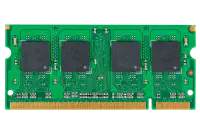
Memory Forensics
We secure volatile data from working memory, reconstruct processes and thereby uncover active attacks.

Disk Forensics
Storage media and forensic images show which data and traces of use can be reconstructed.

Network Forensics
By analyzing network traffic, we prove communication between compromised endpoints and data exfiltration.

Host Forensics
System and file artifacts reveal which user activities took place and how the attack unfolded.
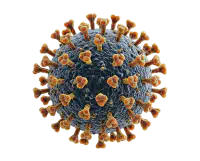
Malware Forensics
When examining malicious software, we recognize attack patterns and prevent reinfection.

Cloud Forensics
In cloud environments, we clarify incidents of a tenant across multiple regions.
Frequently asked questions about IT Forensics in Nuremberg
Your contribution to IT Forensics
If your Nuremberg company is affected by an incident, quick and correct action counts. The decision whether traces remain usable later is usually made in the first few minutes. So involve us early and leave your systems unchanged until they are secured.
Your knowledge of the systems and infrastructure complements our specialist expertise, so that we can carry out digital forensics together. In accordance with the order of volatility, we define what is secured and in which order. Using your access, forensic copies are created, which we then examine.
How you preserve your traces
- Report the incident early
- Leave affected systems unchanged
- Name the systems you consider affected
- Share your knowledge of the infrastructure with us

 Valerie Erhard
 Kadir Ates
 Armin Harbrecht
 Andreas Sperber